Main character- Izanagi
2015/02/27
Japanese History in Persona 4
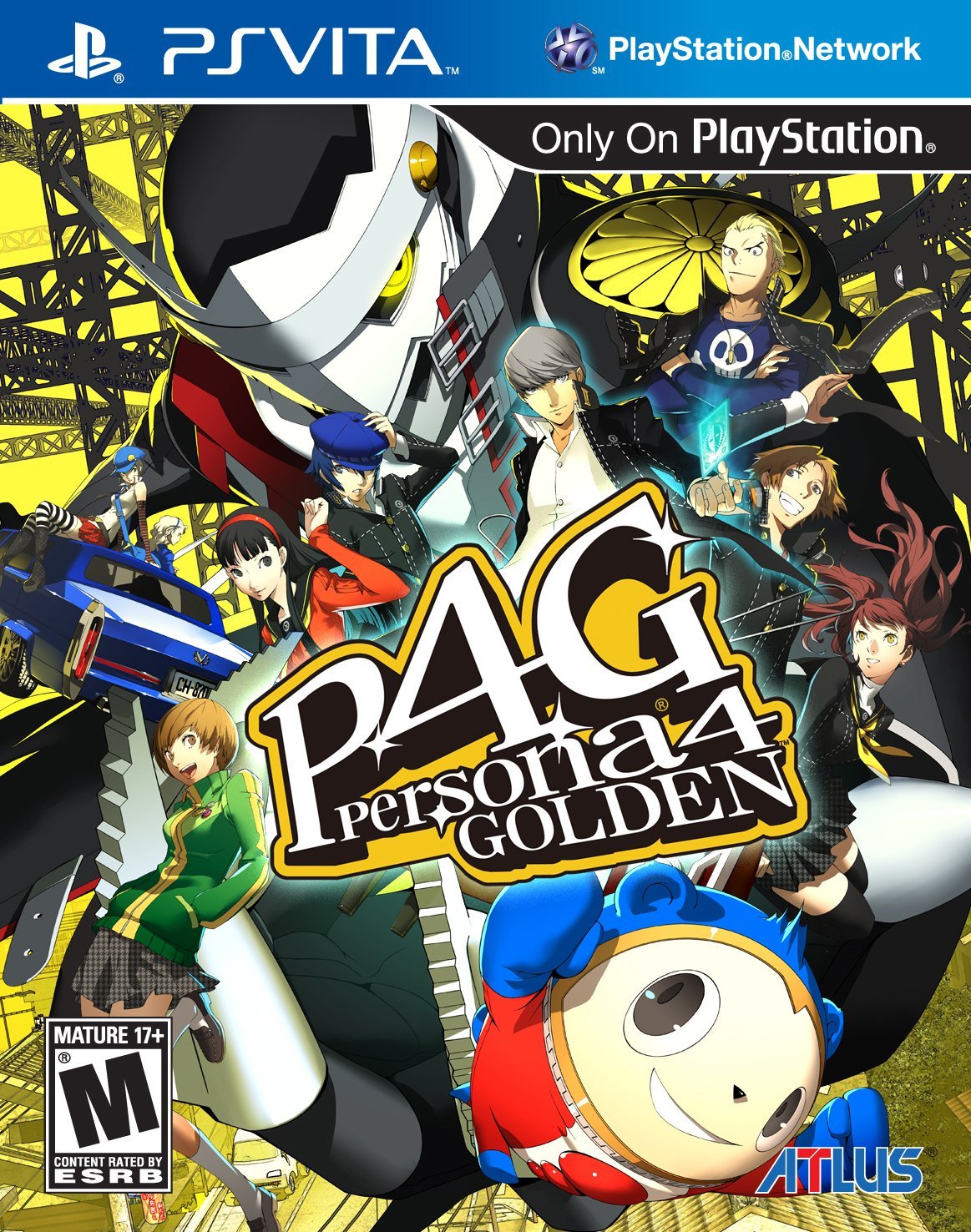
I'm only 2-3 hours into Persona 4, and I'm hooked. My interest in the mythology of the personas started in Persona 3, when I began to recognize a lot of names from myths and legends of other religions, world literature, and world mythologies. I decided in Persona 4, I'd be looking more into the backgrounds of the historical figures the personas are named after and how they relate to the characters who use them.
2015/02/25
Disability in Japanese Media - Angel Beats, A Case Study
Have you ever seen the anime Angel Beats before? If you haven't, you are really missing out! Actually, if you haven't seen any of Key's productions, you are definitely missing out! Key has a remarkable ability to hook you into a story, make you laugh a bit, maybe cry a little, and ultimately end up in the fetal position crying some more.
2015/02/17
Samurai Champloo: Edo Japan, Hip-hop, and the Outcast
Since I’ve
already talked a little about the Sengoku period and the Meiji period, I wanted
to venture in between these two eras and talk about the Edo period. Begun by Ieyasu
Tokugawa, the final of the three great unifiers of Japan, the Tokugawa period
saw Japan through two centuries of peace. It was a time of strict social
hierarchy, flourishing arts, and isolation from the rest of the world (with the
exception of highly regulated trade kept within Nagasaki). This period is the
setting of ShinichirÅ Watanabe’s critically acclaimed anime series Samurai Champloo (2004).
Much
like Watanabe’s previous broadcast anime Cowboy
Bebop (1998), Champloo is a
vibrant blend of styles: Bebop combines
jazzy American movie influences with science fiction, whereas Champloo presents samurai action mixed
with hip-hop culture. Graffiti art combines with calligraphy, thieves and crooks
are portrayed very “gangsta,” and break-dance moves can be seen in many of the
fight scenes.
![]() |
| Mugen in a promotional image |
2015/02/15
Persona 4 and Muramasa Rebirth
As a gamer, I stick mostly with PC games, which means I don't usually get to play games from Japan. My boyfriend, on the other hand, plays more console and portable games than I do. He recently lent me his PS Vita, and with it a lot of games. Two games of particular note are Persona 4 and Muramasa Rebirth.
2015/02/09
Why Can't Moe Just Be Moe?
"Well, take a look! She's super cute, isn't she?
I believe that moe is an essential factor."
Some say that anime as we know it is dying. Some say that things just haven't been the same since K-On! or Lucky☆Star. Female characters are eternally blushing, and their eyes just keep getting bigger and bigger. It's giving all of us anime fans a bad name, they say.
2015/02/02
The Superhuman Mangaka
There are few occupations that require as much hard work for as little monetary gain as being an artist. Many of the greatest artists of all time were never recognized in their lifetime, and art supplies are expensive. This, combined with Japan’s abnormally cruel work expectations, makes being a manga artist, also known as mangaka, an extraordinary feat for more reasons than just skill.
Nobunaga: The Devil Incarnate, or Just Misunderstood?
Nobunaga Oda is another historical character I am fascinated
with. Born in 1534 in the Owari province, he eventually became the leader of
his clan and started a successful military campaign to unify the country. He
was known to be something of a maverick and a forward thinker. He developed the
ashigaru (foot soldiers), iron clad ships, and the use of firearms in the
battlefield. Like other daimyo, he was a patron of the arts and collected fine
crafts. His legacy was carried on by the other two great unifiers, Hideyoshi
Toyotomi and Ieyasu Tokugawa.
![]() |
| Portrait of Nobunaga by a Jesuit artist |
Fortune Telling and Superstition in Persona 4
Recently I began considering fortune telling in Japanese video games. Fortune telling is a huge cultural phenomenon in Japan, and appears in nearly every media. Video games is no exception to this. While looking into fortune telling, I also crossed paths with both superstition, faith, and the mystical. One excellent case study (and one I am currently addicted to) is Persona 4.
Persona is a lovable JRPG / Everyday life simulator. Half the time you are an ordinary school student, the other half you are a shadow-hunting, crime fighting, monster summoning badass. (More on fantasy culture in Japan later.)
2015/01/28
Spirited Away: Change for Good
One of my favorite movies of all time is "Spirited Away." It also happens to be my favorite Studio Ghibli film, well ahead of Howl's Moving Castle and My Neighbor Totoro (my 2nd and 3rd, respectively). I even wrote an essay on it for a Japanese class one semester and was convinced after watching it for the 50th time that there was some meaning to the food presented. This article from The Artifice reminded me of an essay I read to write my own essay. In this essay, Susan Napier states that the film is a reaction to globalization and its perceived threat to sustaining Japan's unique culture and national identity. And the imagery does show this. In the first few minutes, there are the cars, the roads, and the houses, all neat and modern. But the fictional world seems to be reminiscent of Japan from at least two hundred years ago, if not longer.
2015/01/26
Peacemaker Kurogane and a Caricature of Ryoma Sakamoto
I have great interest in the ways that Japan depicts its
history in modern media. While there are certainly mediums that strive for more
historical accuracy, popular mediums like manga, anime and video games often
take newer and more imaginative routes that give their audiences new ways to
look at the past.
One example of an extravagant reimagining of historical
figures can be found in the 1999 manga Peacemaker
Kurogane by Nanae Chrono, which was later adapted into a 24 episode anime
series in 2003. It follows the tale of two brothers who join the Shinsengumi
during the Bakumatsu era, and features many historical figures who were
involved in those turbulent years. The one I would like to highlight today is
Ryoma Sakamoto.
2015/01/25
A History of Odd Games
Japanese video games are renown for their creativity as well as their incredible design teams. This achievement is one that is not a recent development. The Japanese video game culture has years of experience, both positive and...simply weird. This "Oddness" in some Japanese video games, in recent years, has become much more sanitized. However, in the earlier years, some pretty crazy games were made.
2015/01/18
2015/01/16
Muko-nage
I had some trouble figuring out what to write first, but I found this very interesting article on the Mainichi website. According to Mainichi, there is an annual festival in Niigata where bridegrooms are thrown off a five meter slope into the snow at the Matsunoyama Onsen resort. These men were newly married, and the purpose of this festival is to receive the "wild blessing of locals." If one wants to get thrown, you actually have to apply.
Subscribe to:
Posts (Atom)