2015/03/29

DAICON IV Opening Animation: A Five Minute Anime Legacy

Monsters. Giant robots. Aliens. Space battles. Bunny girls. Each one has become a common staple of anime, and only in this medium is it common to see them all together at once.

To celebrate the enormous variety that science fiction (both Western and Japanese) has to offer, a group of amateur animators came together to create 8mm anime shorts to present at a sci-fi convention known as DAICON. DAICON stands for "Osaka Convention," with "dai" being an alternate reading for the first character in "Osaka." Their first short, entitled DAICON III Opening Animation premiered at the 1981 convention, and its sequel, DAICON IV Opening Animation was shown at the 1983 convention.

Conventions like these are the root of otaku culture, these particular events actually pre-dating the term "otaku" itself. Popular anime titles often took inspiration from existing science fiction works found in other parts of the world (Mobile Suit Gundam for example was based on the 1951 novel Starship Troopers). In these videos, we are treated to seeing both Japanese and American science fiction titles placed side by side, particularly in DAICON IV.


2015/03/13

Japanese Myth in Persona 4- Part 2

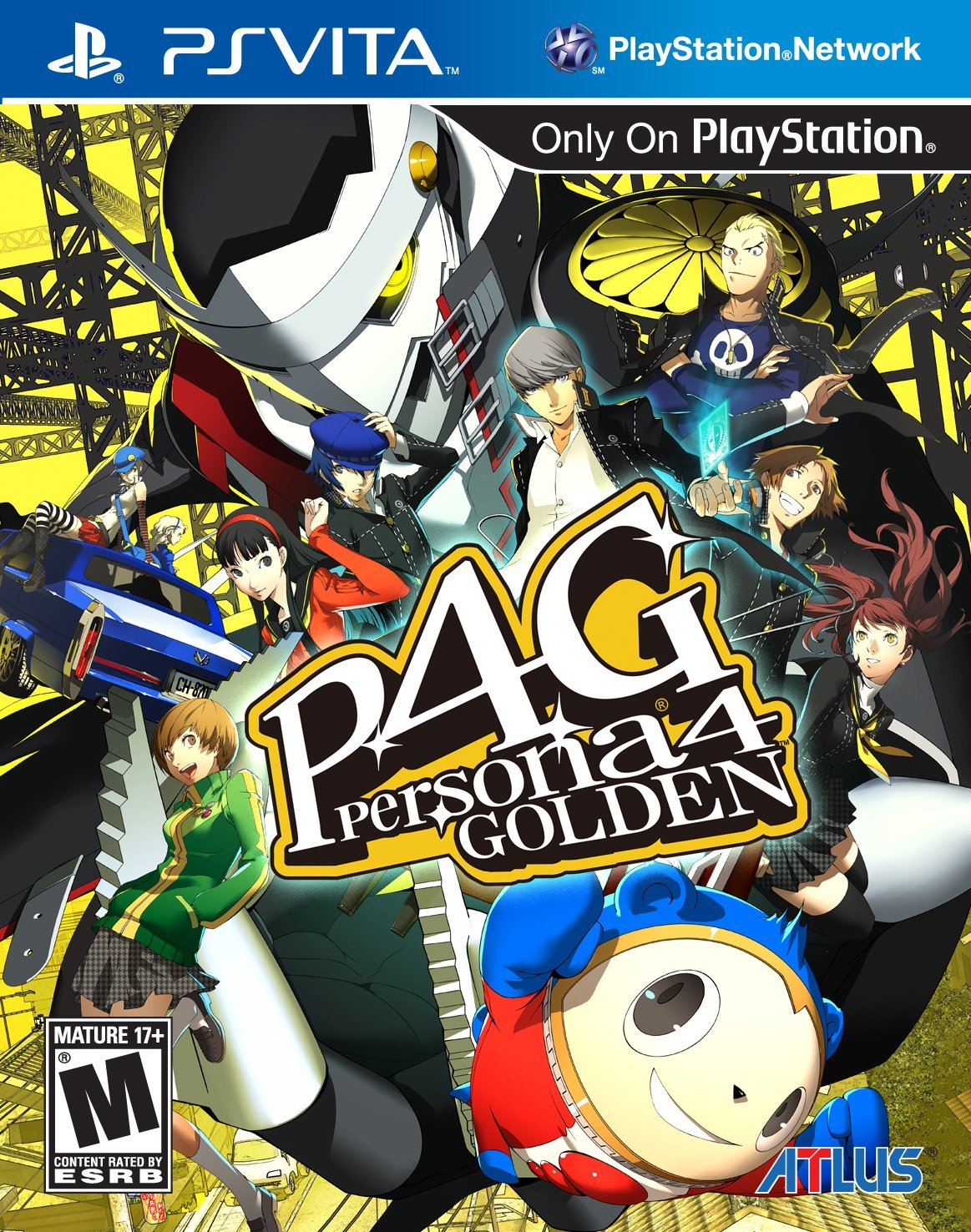
I've continued playing through Persona 4 and found myself wanting to play Persona 3 all over again. Also, the desire to play Persona Q rises. The same Personas show up again and again, and I really like all the different world myths and legends that show up! For example, I've seen Narcissus (a Greek myth) next to Yaksini (Hindu), a nozuchi (Japanese), and Archangel (Christian religion). I think the main cultures the Persona 4 developers draw upon are Japanese, Hindu, and Greek mythologies, religion, and history. I think the reason behind them drawing upon Greek legend is because it's so well-known. Hindu-derived characters may be because of proximity. Japanese legends maybe be because it does take place in Japan, after all, and Japanese players are likely to have heard of some of these. But what better mythology to draw upon than your own?

2015/03/10

Jin, Mugen, and Fuu - Triangular Character Harmony

The success of many large media franchises is often attributed to relatable characters. Sailor Moon is popular because Usagi is cute and stylish but at the same time very human-like, failing tests and waking up late for school, and when she becomes Sailor Moon, she retains her relatable qualities while becoming the badass hero we all want to be. Samurai Champloo, one of my all-time favorite anime, succeeds at this in ways I never thought possible.

2015/03/09

Night Raid 1931: A New Perspective in Historical Anime

In the anime medium, works that are considered to be historical dramas usually seem to focus on the romanticized eras of samurai warriors and powerful daimyos. There are very few that discuss events of the twentieth century, especially events that led up to World War II and Japan’s overwhelming defeat. There are notable titles like Barefoot Gen and Grave of the Fireflies that show the suffering of Japanese civilians, victimized by the nuclear bombs and other American military attacks, but there are hardly any that explicitly show Japan acting as the aggressor.


2015/02/27

Japanese History in Persona 4

I'm only 2-3 hours into Persona 4, and I'm hooked. My interest in the mythology of the personas started in Persona 3, when I began to recognize a lot of names from myths and legends of other religions, world literature, and world mythologies. I decided in Persona 4, I'd be looking more into the backgrounds of the historical figures the personas are named after and how they relate to the characters who use them.

Main character- Izanagi

2015/02/25

Disability in Japanese Media - Angel Beats, A Case Study

Have you ever seen the anime Angel Beats before? If you haven't, you are really missing out! Actually, if you haven't seen any of Key's productions, you are definitely missing out! Key has a remarkable ability to hook you into a story, make you laugh a bit, maybe cry a little, and ultimately end up in the fetal position crying some more.

2015/02/17

Samurai Champloo: Edo Japan, Hip-hop, and the Outcast

Since I’ve already talked a little about the Sengoku period and the Meiji period, I wanted to venture in between these two eras and talk about the Edo period. Begun by Ieyasu Tokugawa, the final of the three great unifiers of Japan, the Tokugawa period saw Japan through two centuries of peace. It was a time of strict social hierarchy, flourishing arts, and isolation from the rest of the world (with the exception of highly regulated trade kept within Nagasaki). This period is the setting of Shinichirō Watanabe’s critically acclaimed anime series Samurai Champloo (2004).

Much like Watanabe’s previous broadcast anime Cowboy Bebop (1998), Champloo is a vibrant blend of styles: Bebop combines jazzy American movie influences with science fiction, whereas Champloo presents samurai action mixed with hip-hop culture. Graffiti art combines with calligraphy, thieves and crooks are portrayed very “gangsta,” and break-dance moves can be seen in many of the fight scenes.

Mugen in a promotional image

2015/02/15

Persona 4 and Muramasa Rebirth

As a gamer, I stick mostly with PC games, which means I don't usually get to play games from Japan. My boyfriend, on the other hand, plays more console and portable games than I do. He recently lent me his PS Vita, and with it a lot of games. Two games of particular note are Persona 4 and Muramasa Rebirth.

2015/02/09

Why Can't Moe Just Be Moe?

"Well, take a look! She's super cute, isn't she?
I believe that moe is an essential factor."

Some say that anime as we know it is dying. Some say that things just haven't been the same since K-On! or Lucky☆Star. Female characters are eternally blushing, and their eyes just keep getting bigger and bigger. It's giving all of us anime fans a bad name, they say.

2015/02/02

The Superhuman Mangaka

There are few occupations that require as much hard work for as little monetary gain as being an artist. Many of the greatest artists of all time were never recognized in their lifetime, and art supplies are expensive. This, combined with Japan’s abnormally cruel work expectations, makes being a manga artist, also known as mangaka, an extraordinary feat for more reasons than just skill.

Nobunaga: The Devil Incarnate, or Just Misunderstood?

Nobunaga Oda is another historical character I am fascinated with. Born in 1534 in the Owari province, he eventually became the leader of his clan and started a successful military campaign to unify the country. He was known to be something of a maverick and a forward thinker. He developed the ashigaru (foot soldiers), iron clad ships, and the use of firearms in the battlefield. Like other daimyo, he was a patron of the arts and collected fine crafts. His legacy was carried on by the other two great unifiers, Hideyoshi Toyotomi and Ieyasu Tokugawa.

Portrait of Nobunaga by a Jesuit artist

Fortune Telling and Superstition in Persona 4

Recently I began considering fortune telling in Japanese video games. Fortune telling is a huge cultural phenomenon in Japan, and appears in nearly every media. Video games is no exception to this. While looking into fortune telling, I also crossed paths with both superstition, faith, and the mystical. One excellent case study (and one I am currently addicted to) is Persona 4.


Persona is a lovable JRPG / Everyday life simulator. Half the time you are an ordinary school student, the other half you are a shadow-hunting, crime fighting, monster summoning badass. (More on fantasy culture in Japan later.) 

2015/01/28

Spirited Away: Change for Good


One of my favorite movies of all time is "Spirited Away." It also happens to be my favorite Studio Ghibli film, well ahead of Howl's Moving Castle and My Neighbor Totoro (my 2nd and 3rd, respectively). I even wrote an essay on it for a Japanese class one semester and was convinced after watching it for the 50th time that there was some meaning to the food presented. This article from The Artifice reminded me of an essay I read to write my own essay. In this essay, Susan Napier states that the film is a reaction to globalization and its perceived threat to sustaining Japan's unique culture and national identity. And the imagery does show this. In the first few minutes, there are the cars, the roads, and the houses, all neat and modern. But the fictional world seems to be reminiscent of Japan from at least two hundred years ago, if not longer.

2015/01/26

Peacemaker Kurogane and a Caricature of Ryoma Sakamoto

I have great interest in the ways that Japan depicts its history in modern media. While there are certainly mediums that strive for more historical accuracy, popular mediums like manga, anime and video games often take newer and more imaginative routes that give their audiences new ways to look at the past.

One example of an extravagant reimagining of historical figures can be found in the 1999 manga Peacemaker Kurogane by Nanae Chrono, which was later adapted into a 24 episode anime series in 2003. It follows the tale of two brothers who join the Shinsengumi during the Bakumatsu era, and features many historical figures who were involved in those turbulent years. The one I would like to highlight today is Ryoma Sakamoto.


Photograph of Ryoma Sakamoto

2015/01/25

A History of Odd Games

Japanese video games are renown for their creativity as well as their incredible design teams. This achievement is one that is not a recent development. The Japanese video game culture has years of experience, both positive and...simply weird. This "Oddness" in some Japanese video games, in recent years, has become much more sanitized. However, in the earlier years, some pretty crazy games were made.


2015/01/18

Learning Japanese Through Manga


Comic books are fun. Fun things are usually frowned upon in schools, especially public ones. But why does this have to be the case? 

It doesn’t.